How to choose fire extinguishers for kitchens and catering
Commercial kitchens combine several fire hazards in one working area, including cooking oils, electrical equipment, gas appliances and combustible materials. Choosing suitable extinguishing equipment means identifying these risks, checking certification requirements and placing the right equipment where staff can reach it quickly.
From this article, you will learn:
- How to identify the main fire risks in commercial kitchens
- Which fire classes are relevant to catering environments
- Why cooking oil fires require particular attention
- How different traditional extinguishing agents compare
- What to check when selecting extinguishers for catering premises
- Where extinguishers should be positioned within a kitchen
- Why staff training and routine inspections remain important
Start with the Fire Risks Present in the Kitchen
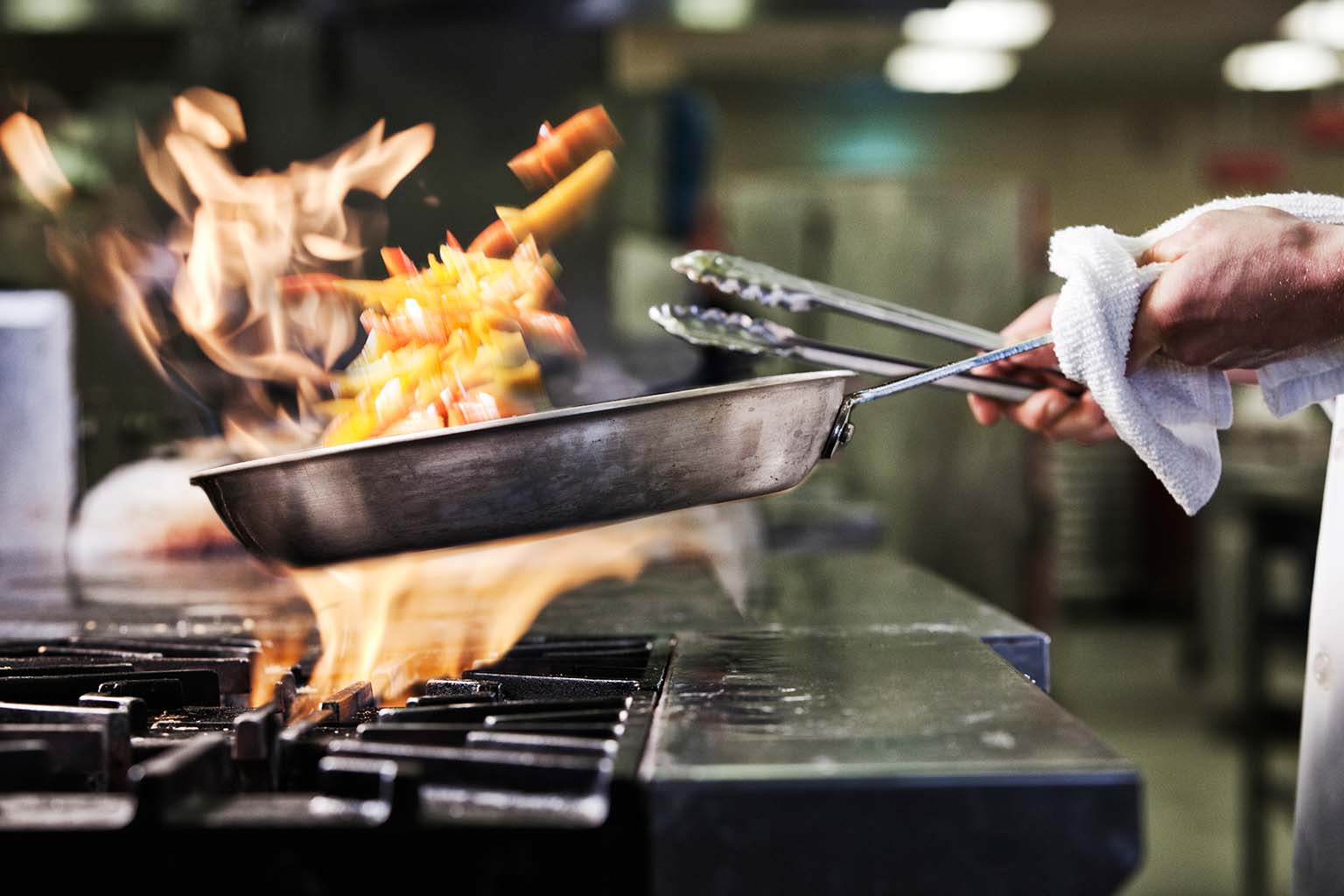
A commercial kitchen can contain several fire risks at the same time. Deep-fat fryers and pans introduce hot cooking oils and fats, while grills, ovens and other appliances provide heat. Packaging, paper products, cloths and furnishings can provide Class A fuel. Depending on the premises, flammable liquids or gas may also be present.
Electrical equipment creates an additional hazard. Although electrical fires are commonly discussed separately, electricity itself is not a fire class under the UK classification system. The burning material determines the fire class, while the presence of live electrical equipment affects which extinguishing medium can be used safely.
A fire risk assessment should therefore consider the equipment, fuels and working processes found in each kitchen rather than relying only on the size of the premises.
Understand the Fire Classes Found in Catering Environments
Fire classes indicate the type of material that is burning. Class A covers solid combustible materials such as paper, wood and textiles. Class B relates to flammable liquids, while Class C covers flammable gases. Class D concerns combustible metals. Class F covers fires involving cooking oils and fats, making it particularly relevant to restaurants, cafés, canteens and other commercial kitchens.
A kitchen may contain more than one of these hazards within a relatively small area. A fryer fire, for example, requires a different assessment from burning packaging beside a preparation station or an incident involving electrical equipment.
For this reason, the specification of fire extinguishers for catering should reflect the complete risk profile of the premises and the applicable local fire-safety requirements.
Compare Extinguishing Agents with the Hazards Present
Traditional extinguisher types have different areas of application, so their labels and fire ratings must be checked before selection. The table below summarises common distinctions relevant to kitchens.
| fire classes agents | |||||||
|---|---|---|---|---|---|---|---|
 |
 |
|
|
|
|
|
|
| water | |
 |
|
|
|
|
|
| foam | |
|
|
|
|
|
|
| powder | |
|
|
|
|
|
|
| CO2 | |
|
|
|
|
|
|
| wet chemicals | |
|
|
|
|
|
|
| water mist | |
|
|
|
|
|
|
Traditional extinguishing agents cover specific fire classes, which can require several extinguisher types in a catering environment. Firexo uses a water-based agent with additives that is tested and certified for all fire classes, including Class F fires involving cooking oils and fats.
Give Particular Attention to Cooking Oil and Fat Fires
Class F fires involve cooking oils and fats at high temperatures. Water must not be applied directly to a burning pan or deep-fat fryer because contact with very hot oil can cause the burning material to spread violently. The selected extinguishing equipment must specifically cover Class F fire.
Fryers should also be considered separately from general kitchen equipment because the quantity and temperature of the oil can increase the severity of an incident.
Staff should know which equipment is intended for a fryer, pan, appliance or other identified hazard. Clear signage, unobstructed access and training reduce hesitation when an immediate response is required.
Check Certification, Rating, Size and Positioning
An extinguisher should be selected based on more than just its extinguishing medium. Its fire rating, capacity, certification and suitability for the intended market also matter.
For Class F risks, check the extinguisher’s specific F rating rather than relying on the extinguishing agent alone. Firexo ratings vary by extinguisher size; for example, the current 2-litre model is rated 25F, while the 6- and 9-litre models are rated 75F.
In the United Kingdom, commercially installed extinguishers must meet the relevant requirements for use within the building’s fire-safety provision. Firexo red extinguishers carry the BSI Kitemark.
Placement is equally important. Extinguishers should remain visible, identified and reachable without requiring a person to move towards the fire. They should not be hidden behind equipment, stock or doors.
When reviewing a catering site, check:
- Fire hazards and fire classes in each working zone
- Extinguisher ratings, certification, capacity and location
- Access routes and signage around firefighting equipment
- Inspection and servicing arrangements
- Staff familiarity with the equipment provided
Reduce Uncertainty Where Several Fire Hazards Overlap
A catering environment may require a quick decision during an incident, particularly when several types of fuel and equipment are stored close together. Conventional extinguisher arrangements may place different extinguishing media within the same premises, meaning the user must identify the appropriate unit before discharging.
Our water-based all-in-one extinguishing agent can tackle all fire classes, including Class F cooking oil and fat fires, as well as incidents involving live electrical equipment. It is also PFAS- free and avoids the powder residue associated with dry-powder extinguishers. This approach simplifies extinguisher selection.
The final specification must still follow the premises fire-risk assessment, installation requirements and certification rules that apply in the relevant country.
Make Extinguisher Management Part of Kitchen Fire Safety
Selecting an extinguisher is only one part of fire protection. Catering operators should keep escape routes clear, maintain cooking and extraction equipment, control combustible materials and ensure employees understand the emergency procedures. Extinguishers also require the inspection and servicing specified by applicable regulations and standards.
Kitchen layouts can change over time as equipment, preparation stations or storage areas are moved. The fire-risk assessment should therefore be reviewed when changes affect the hazards or the location of firefighting equipment.
For businesses comparing extinguishing equipment, the next step is to review the product fire ratings, capacity, certification and intended installation environment.
FAQ
Which fire extinguisher is suitable for a commercial kitchen?
Commercial kitchens can contain several fire hazards. Firexo extinguishers use a water-based agent with additives that can tackle all fire classes, including Class F cooking oil and fat fires.
What fire class applies to cooking oil and fat fires?
Cooking oils and fats are classified as Class F fires in the UK and Europe. Firexo’s water-based extinguishing agent with additives is designed to tackle Class F fires as well as all other fire classes.
Can water be used on a deep-fat fryer fire?
Ordinary water must not be used on a deep-fat fryer fire because it can cause burning oil to spread violently. Firexo, however, uses a specially formulated water-based extinguishing agent with additives, designed and tested for use on Class F fires involving cooking oils and fats.
Can Firexo extinguish different types of kitchen fires?
Yes. Firexo extinguishers are designed to tackle Class A, B, C, D and F fires, as well as fires involving live electrical equipment and lithium-ion batteries.
Where should extinguishers be located in a catering kitchen?
Extinguishers should be visible, clearly identified and readily reachable without requiring a person to move towards the fire. Placement should follow the premises fire-risk assessment and applicable requirements.
How often should catering fire extinguishers be checked?
Fire extinguishers should undergo routine checks and servicing in accordance with the standards and legal requirements applicable to the premises and local market.